Flexible plastic films play important role in everyday life and remain an essential material for many household and commercial applications. At the same time, increasing recycling rates and improving circularity for flexible plastics continues to be a major challenge and priority across the industry.
Our objective at Cedo is to maximise the amount of recycled material used in our products, which will help increase recycling rates and advance the transition to the more circular economy.
Recycling
Reduce waste
recycling limits the amount of waste sent to landfills and incinerators, helping to preserve the environment and reduce pollution.
Save resources
recycling reduces demand for new raw materials. The environmental impact of mechanical recycling is less than the impact of producing virgin material*.
Lower CO2 emissions
recycling reduces the greenhouse gas emissions associated with the production of new materials, helping to mitigate the impacts of climate change*.
Create a circular economy
just 10% of plastic is recycled worldwide (OECD “Global Plastic Outlook” 2022), the rest is lost in the environment, sent to landfill or incinerated. The shift to recycling closes the loop by decreasing demand for new raw materials.
Flexible packaging waste collected from households is difficult to handle and to recycle.
With decades of recycling experience, Cedo has developed expertise in processing a wide range of flexible plastic waste materials into recycled plastics suitable for film applications.
Easy
Medium
Cedo
>40 Years
of experience
Cedo has always been a leader in recycling and recycling technology, with a long term commitment to using as much recycled material as possible in all our products.
Since 1979, Cedo has continuously developed its recycling expertise and expanded its capabilities in the processing and reuse of plastic waste materials. Over the years, our experience has grown across different polymers, technologies and recycling applications, supporting the development of high-quality recycled plastics for new products.
Today, our recycling activities are focused on helping to divert flexible plastic waste away from landfill or incineration and giving these materials a new life through recycling. We continue to develop solutions for post-consumer flexible plastics, including household packaging, one of the most challenging waste streams to recycle.
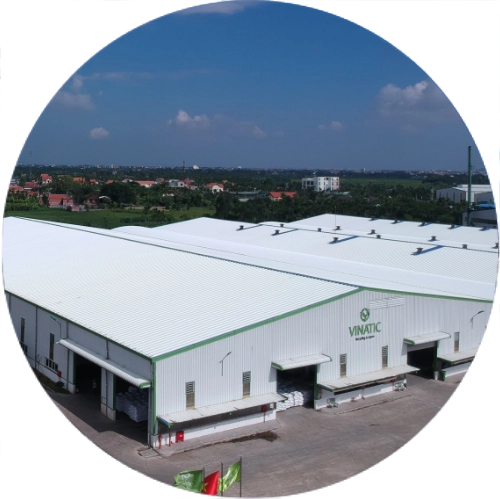
Cedo has also strengthened its recycling capabilities through the acquisitions of Vinatic in Vietnam, Plasta Group in Lithuania and Sweden, and Polimero S.r.l. in Italy, expanding the group’s recycling operations and presence across Europe and Asia.
These strategic acquisitions marked a significant milestone in our journey to becoming the leading vertically integrated circularity platform for flexible plastic films servicing Europe. By expanding our recycling expertise and infrastructure, we have strengthened our ability to give plastic waste a second life, ensuring a stable supply of high-quality recycled material for our production facilities.
Recycling of plastic waste, especially that generated by households, is not a simple operation. To be successful, it requires specialist knowledge and a process that has been perfected over many years.
Mechanical recycling is a process where plastic waste is recovered through sorting, washing, drying, grinding and re-granulation. These activities do not change the chemical structure of the material which therefore allows multiple re-use or re-cycling of the plastic waste.
Would You like to learn more about recycling in Cedo? Please visit our dedicated websites where you can read more about every step of our recycling process.